Songyang proves that a village can be reborn by honoring its culture and cultivating its industrial ecosystem.

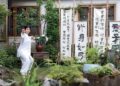
The Wenli – Songyang Sanmiao Cultural Exchange Center revitalizes historical relics into a multifunctional complex.
For the 14th Five-Year Plan period, rural revitalization is a strategic task of China’s modernization. Across the country, a vibrant rural landscape is emerging, characterized by thriving industries, a pleasant living environment, effective governance and prosperous living. This transformation reflects a commitment to sustainable development.
Nestled in the mountainous region of southwest Zhejiang, Songyang District offers a shining example of rural revitalization in China through its innovative practices. His explorations bring relevant Chinese wisdom to the global search for solutions to urban and rural development challenges.
Songyang previously had more than a hundred well-preserved ancient villages, most of which were centuries old. However, in the early 2000s, large-scale demolitions and reconstructions threatened to wipe out its cultural heritage.
In 2012, the nationwide introduction of the concept of “traditional village” broadened conservation perspectives to encompass multiple dimensions. Seizing this opportunity, Songyang quickly launched a survey on cultural heritage and embarked on census procedures. To date, the district has 78 registered traditional villages, becoming a pioneer in the protection and development of traditional villages and laying the cultural foundation for rural revitalization.

A UN-Habitat delegation visits Songzhuang village in Songyang (PHOTOS: YU JIE)
Faced with dilapidated houses and rural exodus, Songyang has adopted a sustainable approach. One of the flagship initiatives is the “Old House Rescue Program”, launched in 2016. This program was funded by foundations, local authorities and homeowners. By the end of 2024, 326 old houses spread across 78 villages had been renovated according to the principle of “minimum intervention”. Recognized for its reproducibility, this model has been integrated into China’s Rural Revitalization Strategy Plan (2018-2022).
In addition, Songyang invited leading domestic and international designers to carry out micro-renovations of unused old houses. The creation of public spaces such as a brown sugar factory, a contract museum or bookstores, revives villages and stimulates the vitality of local industries.
Taking advantage of its natural resources and the results of its restoration program, Songyang is focusing on the development of its two pillar industries. First, the tea industry. This predominant traditional sector has 153,200 mu (1 mu = 1/15 ha) of plantations, with an industrial chain generating more than 13.5 billion yuan. In recent years, thanks to the growth of e-commerce and direct sales, this industry has contributed significantly to increasing the income of local farmers. Second, cultural tourism. It has attracted nearly a billion yuan in private investment to develop a new tourism model combining old houses and lodges. Several charming accommodations now enjoy a good reputation, which allows this sector to achieve an annual turnover exceeding 150 million yuan.
The district’s practices have not only gained wide recognition in China, but have also spread internationally. His rural architecture projects have been presented at prestigious events such as the Venice Biennale.
In 2019, Songyang was the only district-level community invited to share its innovative experiences at the 1st session of the United Nations Human Settlements Program (UN-Habitat) Assembly. Subsequently, the district partnered with the organization and hosted four editions of the International Forum on Urban-Rural Linkages.
The case of Songyang demonstrates that, in the process of modernization, rural areas can achieve endogenous and sustainable revitalization through the enhancement of local culture, industrial development and better urban-rural integration.



![[C Finance]Central Bank: The goal of keeping the RMB exchange rate basically stable will not change](https://beijingherald.com/wp-content/uploads/2025/01/C-FinanceCentral-Bank-The-goal-of-keeping-the-RMB-exchange-120x86.jpeg)