The Hainan Free Trade Port, now in full operational phase, is establishing itself as a new showcase of Chinese institutional openness.
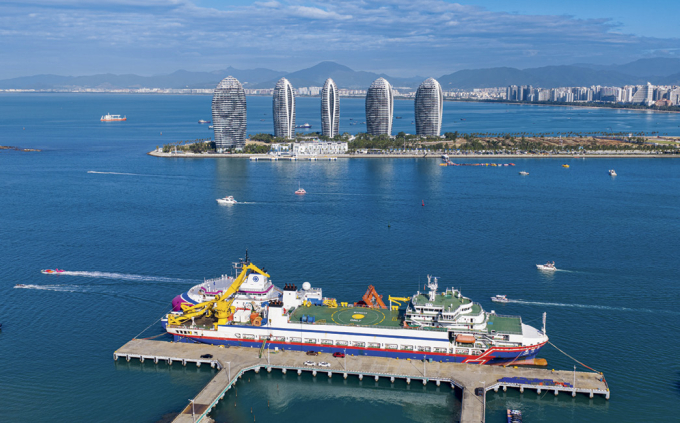
A yacht anchors in the waters of Sanya on December 16, 2025.
The Hainan Free Trade Port (HPLEH) represents a major step forward in China’s strategy to promote high-level opening-up and strengthen its integration into the global economy. The recent launch of the island-wide special customs operations marks a historic transition, moving the project from institutional design to full implementation.
Since the introduction of this new customs model on December 18, 2025, the region has shown encouraging results, characterized by increased fluidity in the flow of goods, people and capital. This promising start demonstrates China’s unwavering commitment to institutional opening, bringing a breath of vitality to the global economy amid slowing growth.
Building a strategic gateway to the world
 The PLEH is designed to serve as a strategic gateway for China’s opening up in the new era. This ambition builds on the island’s geographical advantages and is part of the national strategy to deepen reform and opening-up.
With its unique geographic position, Hainan serves as a natural pivot between the Chinese and Southeast Asian markets. Its natural assets and special economic zone experience have laid a solid foundation for economic growth, and the free trade port regime has given new impetus to its development.
Guided by the Master Plan for the Construction of the Hainan Free Trade Port and the associated legislative framework, the province is modernizing its industrial system, promoting integrated institutional innovation and improving its business environment. The aim is to make Hainan a major magnet for international investment and business operations. Foreign media also point out that tax and trade facilitation policies could transform the island into a privileged channel for access of South-East Asian products to the Chinese market.
Freeing the circulation of production factors
PLEH focuses on institutional innovation to reduce business costs and improve operational efficiency. The model is based on the triptych of “zero customs duties, reduced tax rates and a simplified tax system”, complemented by policies guaranteeing free, convenient, orderly and secure movement of goods, investments, capital, people and data.
Since the launch of special customs operations, a distinctive customs supervision system has been implemented: “freer access on the first line, regulated access on the second line and free movement within the island”. This approach allows for more flexible regulation of trade, easier movement of people and significantly more efficient cross-border flows of capital.
Tax reform played a central role in this transformation. The list of products exempt from customs duties has been increased from 1,900 to approximately 6,600 tariff codes, and its access has been extended to almost all local importers. Goods can now move duty-free between eligible entities on the island, and the conditions for applying the customs exemption regime on the added value resulting from processing have also been further relaxed. Between December 18, 2025 and January 17, 2026, more than 10,000 new entities benefited from the “zero customs duty” regime, for imports totaling 750 million yuan, an increase of 38.9% year-on-year.
In addition, Hainan introduced the country’s first negative list for cross-border trade in services, 22 special measures to facilitate market access, and the country’s shortest negative list for foreign investment. These devices illustrate a desire to streamline the circulation of factors.
Align with global standards
The Law of the People’s Republic of China on the Hainan Free Trade Port stipulates that the PLEH shall take the initiative to adapt to changes in international economic and trade rules and trends in global economic governance reform. Accordingly, Hainan actively adopts international standards in intellectual property, competition, public procurement and environmental protection according to local conditions. The aim is to create a transparent, fair and predictable business environment.
Hainan is also strengthening its alignment with high-level international agreements such as the Comprehensive and Progressive Agreement for Trans-Pacific Partnership (CPTPP) and the Digital Economy Partnership Agreement (DEPA), while implementing the Regional Comprehensive Economic Partnership (RCEP). The institutional design of the PLEH draws on the practices of other free trade ports, such as those of Singapore, Dubai and Hong Kong. Initiatives such as the introduction of ad hoc arbitration provide avenues for resolving commercial disputes consistent with international standards.
These efforts reaffirm China’s determination to promote high-level opening-up and make the PLEH an open platform for international influence.
*YU YUNQUAN is vice president of China International Communication Group.



![[C Finance]Central Bank: The goal of keeping the RMB exchange rate basically stable will not change](https://beijingherald.com/wp-content/uploads/2025/01/C-FinanceCentral-Bank-The-goal-of-keeping-the-RMB-exchange-120x86.jpeg)