While the West navigates between crises and elections, China is planning its long-term trajectory.
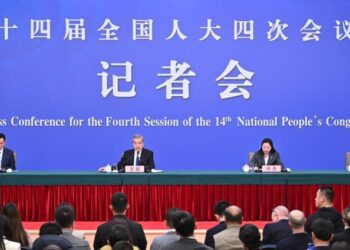
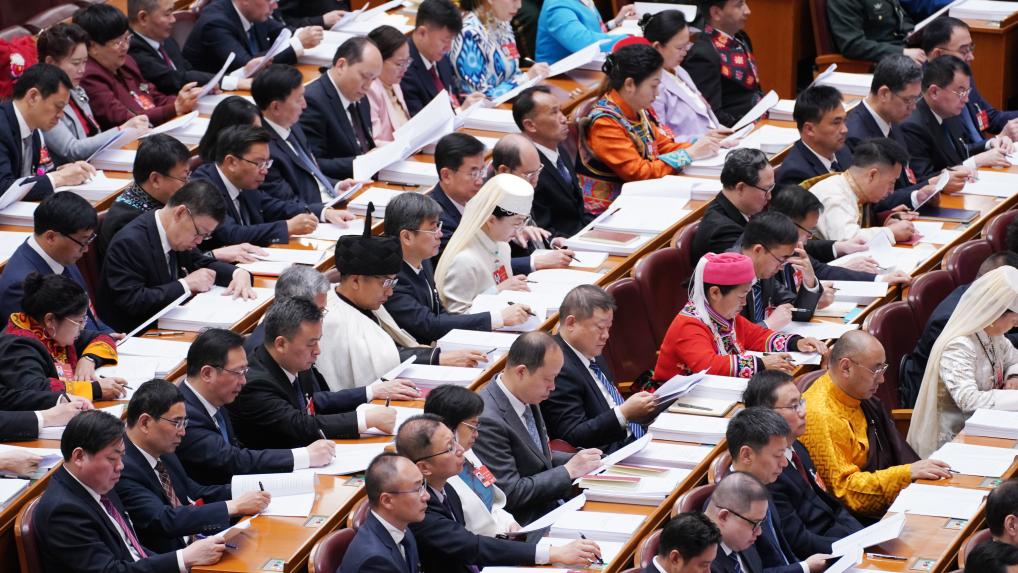
While US-Israeli aggression ignites the Middle East and saturates the news, China methodically continues its process of long-term governance. On March 4, the Two Sessions opened. This meeting is crucial because it ratifies the launch of the 15th Five-Year Plan (2026-2030).
These sessions are scrutinized by world leaders and decision-makers. They define the directions of China, a major power whose economic growth and market of 1.4 billion inhabitants are global drivers. The country has made historic progress in reducing poverty, reaching a standard of living that has caught up, in terms of purchasing power, with that of Western countries. Above all, China strives to reduce inequalities and precariousness compared to these same countries.
The Two Sessions are an example of democratic governance for the rest of the world. The decisions taken there are not, as in multi-party democracies, the result of long confrontations of opinions between parties whose goal is to assert their influence or retain power. This problem is not that of the Chinese Communist Party (CCP), which is only accountable to the people. The decisions adopted are the fruit of experience and experimentation following the principle according to which “the criterion of Truth is the test of facts”, and not ideology nor the struggle for the conquest of power for the benefit of political and financial ruling elites often foreign to the country, against the people.
Mechanisms and characteristics of full-process popular democracy
The Chinese government, through the full-process people’s democracy governance model, demonstrates its ability to ensure effective alignment between long-term development goals and the immediate needs of the people through an integrated and participatory approach.
Before developing policies, the government consults various stakeholders – experts, industry representatives, civil society organizations and ordinary citizens – to gather diverse opinions to ensure that decisions reflect the aspirations of the population. Citizens are encouraged to contribute through popular assemblies, political consultations and digital platforms. Once policies are implemented, feedback mechanisms assess their impact and allow rapid adjustments to correct any shortcomings. Finally, the development of five-year plans and long-term strategies is carried out with transparency and responsibility, making it possible to reconcile immediate satisfaction of the population and sustainable and harmonious growth.
This comprehensive democracy, the pillar of Chinese socialist democracy, is part of the CCP’s action in the service of the people. It is defined by three fundamental characteristics. First, it is “broadest” in the sense that all areas of state affairs and society are open to popular participation. Second, it is “the most authentic”, because under the leadership of the CCP, the people’s legitimate rights and interests are protected, and the people can speak out through various channels against decisions contrary to their interests. Finally, it is “the most effective”, as evidenced by the rapid and stable development of China, driven by the fluidity of decision-making, its implementation and its control.
Differences between Western and Chinese democracies
It is relevant to invoke history by going back to a divergence in political philosophy that appeared at the two ends of the Eurasian continent around Antiquity, from the 5th century BC. This break responded to similar conflict situations: the wars between Greek cities in the West and the Warring States era in China. The two regions had to respond to an imperative of military survival and define administrative efficiency guaranteeing social peace and stability.
In China, a thinker like Xun Zi asserted that “human nature is evil,” opening the door to legalism. Han Fei Zi, his disciple, concluded that one should “govern by law, not by virtue.” Legalism was thus adopted during the unification of China under the Qin, then later supplemented by Confucianism. These two philosophies still permeate China’s governance today, including in socialist democracy.
In the West, Aristotle defined man as a “political animal” inclined to live in society. Socrates and Plato believed that education could make citizens virtuous. This is how representative democracy was born in the Greek cities, although it excluded women, slaves and “metics” (individuals residing in the city but coming from elsewhere). If divine right monarchies then developed with the support of Christianity, it should be noted that until the Enlightenment – a period when Voltaire and Leibniz highlighted the influence of China – Western elites were hereditary, while China already practiced meritocracy via imperial examinations.
Today, although republics and constitutional monarchies have become widespread in the West, they are still based on a multi-party system. The “consubstantial” problem with this system is that the appointment of decision-makers is linked to their election, therefore to the satisfaction they give to their own voters, to those who financially support their electoral campaign. Even more serious, unelected financial interests make and break governments, sometimes making countries ungovernable.
In the name of freedom and the market, or even common rules of integration into a multinational whole, it is no longer possible for European countries to project the future through a five-year plan system, although effective after the Second World War.
These shortcomings highlight the undeniable advantages of Chinese democracy in terms of stability and long-term planning. Historically, China enriched Western traders until the Opium Wars. Since the policy of reform and opening-up (1978), Chinese products have provided purchasing power to the global working classes. Current customs duties are a way of capturing this small advantage to the detriment of the disadvantaged classes without giving them work.
In the Chinese system, the decision-making mechanism is scientific, democratic and rapid, far from partisan ideological battles. Under the leadership of the CPC, the interests of all parties are taken into account to achieve rapid and long-term development under the rule of law.
The country’s resources are not wasted on electoral prebends, but concentrated on improving the quality of life of the people. For several years, I have affirmed that China is no longer only the “workshop of the world”, but that it has also become a true “laboratory of ideas for the world”. This is why I hope that cooperation between China and other countries will now focus on the area of governance. Let us not forget that the first Age of Enlightenment was already inspired by the Chinese model.
*JEAN PÉGOURET is a French sinologist and geopolitologist, president of Saphir Eurasia Promotion.