From the classroom in Beijing to the construction sites of Ghana: the journey of a senior civil servant trained in China, who became an actor in Sino-African cooperation.
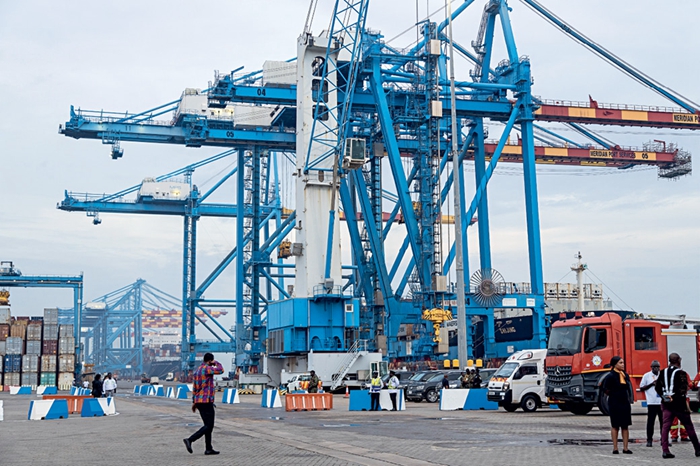
Inauguration of the second phase of the Tema port extension project, Ghana, on November 13, 2025
I n 2025, on the stage of the Academy for International Business Officials (AIBO), an institution under the Chinese Ministry of Commerce in Beijing, the spotlight was on me. Faced with around twenty colleagues from English-speaking African countries, I spoke in a calm voice: “Our gathering goes beyond our respective functions as public agents: we are partners in common development. This link, which transcends geographical distances, illustrates the very essence of Sino-African cooperation, based on equality, mutual assistance and deep symbiosis. »
Going back in time to my first immersion in China, in 2015, I see again the young economist that I was at the Ministry of Finance of Ghana, then completely foreign to this Asian country. I never would have imagined that over these years, I would move from the rank of attentive listener to that of a committed speaker for Sino-African cooperation. This initial trip not only changed my perception of international cooperation, it had a lasting influence on the course of my life.
Continue my studies
In 2015, a study visit to China changed my ideas. I was deeply affected by the TGV which connects Beijing to Tianjin in thirty minutes and the modern industrial parks along the line. The contrast with Ghana at the time was striking: national electricity coverage peaked at 55%, the capital had a deficit of more than a million housing units and our bauxite, although abundant, was exported in its raw state with a paltry added value. Seeing China, a nation that had also experienced oppression and poverty, chart its own path to modernization was a revelation. From then on, my decision was made: I would return to train there to bring back development strategies adapted to my country.
In 2017, through the “Youth of Excellence Scheme of China” (YES China) program, I was admitted to the University of International Business and Economics for a master’s degree in international economic cooperation. This is where Professor Justin Yifu Lin’s theory of new structural economics informed my thinking: each country must develop based on its own comparative advantages, without blindly copying Western models. With this background, two years later, I joined the Institute of South-South Cooperation and Development at Peking University to prepare a doctorate. I returned to the capital, this time, to deepen my research and confront Ghanaian challenges with Chinese teachings.
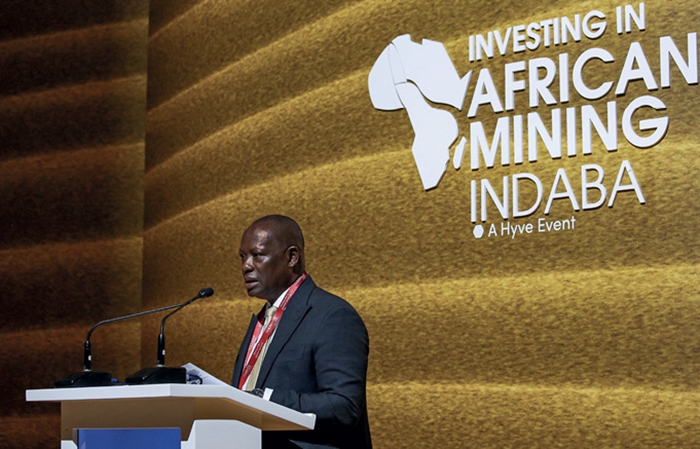
Emmanuel Armah-Kofi Buah, Ghana’s Minister of Lands and Natural Resources, speaks at the Investing in African Mining Indaba in Cape Town, South Africa, February 10, 2026.
From doubt to hope
When I arrived at the Institute for South-South Cooperation and Development, which brings together students from countries in the Global South, my anxiety was at its peak. Faced with the diversity of challenges specific to each country, I wondered: can a single theory adapt to such varied realities? Do teachers view developing countries as a monolithic bloc?
The Institute’s educational model quickly swept away these fears. Far from being confined to the Chinese economy, more than 80% of professors have served within international organizations such as the United Nations or the World Bank. This expertise gives them in-depth knowledge of Africa and the concrete obstacles it faces. In class, they precisely analyze the development problems specific to each country, without ever imposing a rigid theoretical approach.
Using China’s experience as a case study, the Institute inspires us to design our own solutions through debate and collective strategizing. What touched me the most was the story of a professor who described, based on his experience, China’s transition from poverty to economic takeoff. This country too has endured foreign occupation and difficulties similar to those of Ghana. This generational resilience gave rise to a solemn promise in me: to devote my life to the development of Ghana.
Carried by this conviction, I invested myself entirely in my research. Many nights in the seminar room we studied Chinese development finance cases to envision Ghana’s development pathways. These shared reflections on the industrialization of Africa resulted in the writing of joint articles, exploring diversified growth trajectories for Africa.
My thesis supervisor, Professor Xu Jiajun, always encouraged me to rely on the local realities of Ghana, without ever asking me to blindly apply the “Chinese model”. His understanding of Ghana’s colonial legacies far exceeds that of many local researchers. This study experience made me deeply understand that countries in the Global South must inspire and support each other to overcome development impasses.
Build a bridge
After obtaining my doctorate, I returned to Ghana driven by a sense of duty. Appointed director of the Chinese Affairs Office at the Ministry of Finance, I became a bridge between China and Ghana. After my return, I coordinated the implementation of 17 cooperation projects, each of which brought a tangible improvement to the daily lives of my fellow citizens.
Among them, the creation of a 420 MW thermal power plant, representing an investment of 600 million dollars, initially aroused strong criticism. At the head of my team, I led intense negotiations to adapt the project to local electrical needs and ensure rigorous monitoring. Today, the plant operates stably: the national electricity coverage rate has increased from 55% to 76%. Businesses in Accra can now stay open 24 hours a day and factories no longer fear outages. The lights that come on every evening in homes are the most vibrant testimony to the success of Sino-African cooperation.
At the same time, a social housing project worth a total of $150 million has already enabled the delivery of 1,200 homes to low-income families, thus offering nearly 6,000 people the opportunity to leave the slums. Seeing these lives transformed gives full meaning to my commitment.
Finally, the financing diversification strategy that I initiated has profoundly reshaped our economic landscape. By reducing our dependence on Western multilateral financial institutions, which went from 62% to 38%, and by making China our second largest donor, Ghana has gained sovereignty. This model of cooperation, flexible and pragmatic, now offers us more control over our own agenda and the assurance of progressing in complete autonomy.
A promising future
Each time a compatriot asks me to join the Institute for South-South Cooperation and Development, I always recommend that they go there with an acute awareness of the challenges of their country and a desire for change. The Institute’s professors convey a crucial lesson: there is no universal recipe. The only way is to rely on local realities and explore concrete solutions. To succeed, we must also break stereotypes, demonstrate sincerity in exchanges and seek mutual understanding, because this is the starting point of all international cooperation.
Over the past decade, I have seen China-Africa cooperation foster the emergence of Africa’s self-reliant development. By remaining an equal partner, China shares its know-how and provides support without ever dictating a trajectory. This mutual respect has allowed African countries to move towards modernization without ever again submitting to the will of others.
Even today, I continue to devote myself to the development of Ghana. I am confident that in the near future, I will be able to honor my promise by telling the world about my country’s takeoff. This story will shine the light of China-Africa cooperation and the spirit of South-South solidarity, illuminating the way forward for many other developing countries.
*DODOO-AMOO ERIC NII AMU OKOTOKATA is Director of the Chinese Affairs Office at the Ministry of Finance, Ghana.



![[C Finance]Central Bank: The goal of keeping the RMB exchange rate basically stable will not change](https://beijingherald.com/wp-content/uploads/2025/01/C-FinanceCentral-Bank-The-goal-of-keeping-the-RMB-exchange-120x86.jpeg)