Faced with climate change, China and the EU are building a new approach together: placing the right to a healthy environment at the heart of human rights.
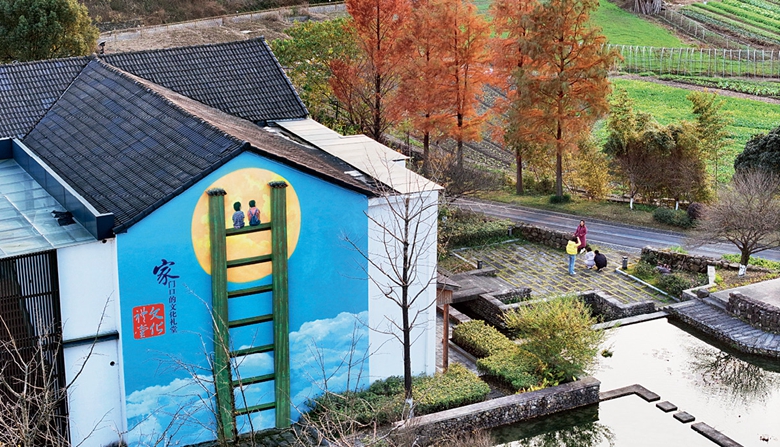
Yucun Village (Zhejiang), where the concept of “clear waters and green mountains are worth their weight in gold” was formulated, allows its residents to prosper through sustainable development and ecological tourism.
In China, we no longer want to just eat enough, but to live in a healthy environment. Clean air, preserved water and a stable energy supply – once considered secondary – are now essential imperatives. This requirement lays the foundations of a true “right to green survival”. This right is not a new article of law, but the ecological extension of the right to health, the right to development and social justice.
Because climate change knows no borders, no state can address this challenge in isolation. In this context, China and Europe, two great civilizations and economies, are exploring a path to implementing human rights beyond their system differences, through pragmatic climate cooperation. This approach, resolutely focused on real problems, offers a concrete and effective response to the global governance of human rights.
Chinese implementation of the right to green survival
Institutionally, China has not included the right to the environment in its Constitution as an isolated fundamental right. Instead, it has integrated ecological governance at the very heart of its development model and social protection, thus laying a solid foundation for the right to green survival.
In 2005, as secretary of the Zhejiang provincial committee of the Communist Party of China, Xi Jinping formulated the famous concept “clear waters and green mountains are worth their weight in gold” during a visit to Yucun village. In two decades, a growing number of Chinese have understood that the environment is not only a resource to be exploited, but an essential component of quality of life. In 2013, a new official orientation affirming that “a healthy environment provides the greatest well-being to the people” completed this change. Well-being is no longer measured only by material progress, but now includes the purity of the air, the safety of water and the quality of habitat, inseparable from a dignified life.
The data confirms this development. In 2024, the average concentration of PM2.5 in cities stood at 29.3 µg/m3, a decrease of 16.3% compared to 2020. The proportion of surface water sections with excellent quality reached 90.4%, exceeding 90% for the first time. In the village of Wangtun (Qinghai), the restoration of the Dela River basin was accompanied by the creation of ecological guard posts. This project transformed residents into players in environmental protection, illustrating a successful alliance between the right to development in rural areas and ecological protection.
The long-term impact of the energy transition is just as important. During the 14th Five-Year Plan (2021-2025), China built the largest renewable energy system in the world: by the end of 2025, the installed capacity reached 2.34 billion kilowatts, or 60% of the country’s total electricity mix, compared to 40% five years earlier. Through this effort, the country intends to assume its responsibility towards future generations by refusing to bequeath them an ecological debt.
On a legal level, the Ecological and Environmental Code integrates citizen participation and transparency, laying the foundations for the right to environmental recourse. In practice, environmental justice remains faced with obstacles such as the high threshold for public interest actions or the slow pace of compensation. But beyond these national adjustments, only international cooperation can effectively protect the dignity of every human being in the face of climate change.

The 30th Conference of the Parties to the United Nations Framework Convention on Climate Change (COP30) in Belém (Brazil), November 18, 2025
Climate cooperation for development and human rights
Rather than sticking to theoretical debates, China and the EU have chosen to act on the concrete terrain of innovation, living conditions and human rights. In July 2025, they issued a joint statement on climate change, reaffirming the central role of the United Nations Framework Convention on Climate Change and the Paris Agreement. At a time when the United States has once again withdrawn from the latter, the Sino-European axis has emerged as the main bulwark for the defense of the global public interest.
This cooperation is not limited to political declarations; it is anchored in concrete technological and industrial partnerships. In the energy sector, China’s competitiveness in manufacturing wind power equipment ideally complements European expertise in power grid management. On the industrial level, Chinese investments in green energies in Europe are increasing. The giant battery factory built by CATL in Hungary contributes both to the European electric vehicle sector and to the continent’s energy transition. By lowering the global cost of access to green technologies, this cooperation allows more people to benefit from the fruits of ecological development, thus strengthening equality in the right to development.
Furthermore, Sino-European discussions on the mutual recognition of carbon market standards reduce compliance costs for companies while preventing “green barriers” from penalizing the value chains of developing countries, thus protecting the living standards of local workers. This ambition is also exported to third-party markets. Like the Noor solar complex in Morocco, to which China and France have made their contribution, Sino-European technological transfers cross the Mediterranean to directly benefit developing economies.
The lesson of climate cooperation between China and the EU lies in one observation: when two powers tackle the fundamental question of humanity’s survival together, differences over what a better life is cease to be insurmountable obstacles. Certainly, the approaches differ: China favors collective well-being and social security, while Europe emphasizes individual rights and legal remedies. But on the climate, they have found their greatest common denominator: ensuring survival and development. Human rights are not limited to courtroom rhetoric: they are measured by concrete indicators such as access to clean energy and quality water. This approach, which consists of “promoting cooperation to stimulate development, and through development to promote human rights”, allows us to break the deadlock that would want to define everything on paper before daring to act.

Workers observe the floating photovoltaic installations of the Oued Rmel dam, near the Tanger Med port complex, Morocco, August 7, 2025.
Building a just and shared global system for the right to green survival
Following COP30 in Belém in 2025, China and the EU’s joint climate commitments strive to translate the right to green survival into binding rules for global climate governance.
On a global scale, the low-carbon transition requires placing the “just transition” at the heart of priorities. It is now crucial to put in place social anticipation mechanisms: employment monitoring systems, adequate social compensation and ambitious professional retraining programs. The aim is to prevent workers in traditional energy sectors from being left behind in the green wave, and to preserve the dignity of vulnerable groups.
More fundamentally, the fruits of the green transition must benefit the global South more. The right to green survival is a universal right that belongs to all of humanity. It cannot become a privilege reserved for a few developed countries. As the climate crisis threatens our common roof, China and the EU demonstrate through their action that blaming each other leads to nothing, while moving forward together opens up opportunities. This joint action, beyond geopolitical divisions, protects the right to green survival for all generations to come.
*YUAN HAORAN is a researcher at the Human Rights Research Center of the Northwest University of Political Science and Law.



![[C Finance]Central Bank: The goal of keeping the RMB exchange rate basically stable will not change](https://beijingherald.com/wp-content/uploads/2025/01/C-FinanceCentral-Bank-The-goal-of-keeping-the-RMB-exchange-120x86.jpeg)